





 angol
angol  kínai (Kína)
  spanyol
  német
német  Francia
  olasz
olasz  japán
japán  koreai
  bolgár
  görög
görög  indonéz
  kínai (Hongkong)
  orosz
orosz  dán
dán  finn
finn  török
török  holland
  portugál
  svéd
svéd  román
román  szlovák
  szerb
szerb  norvég
  horvát
  albán
albán  katalán
  cseh
cseh  észt
észt  örmény
  bengáli
  amhara
  fényesít
  thai
thai  ukrán
ukrán  vietnami







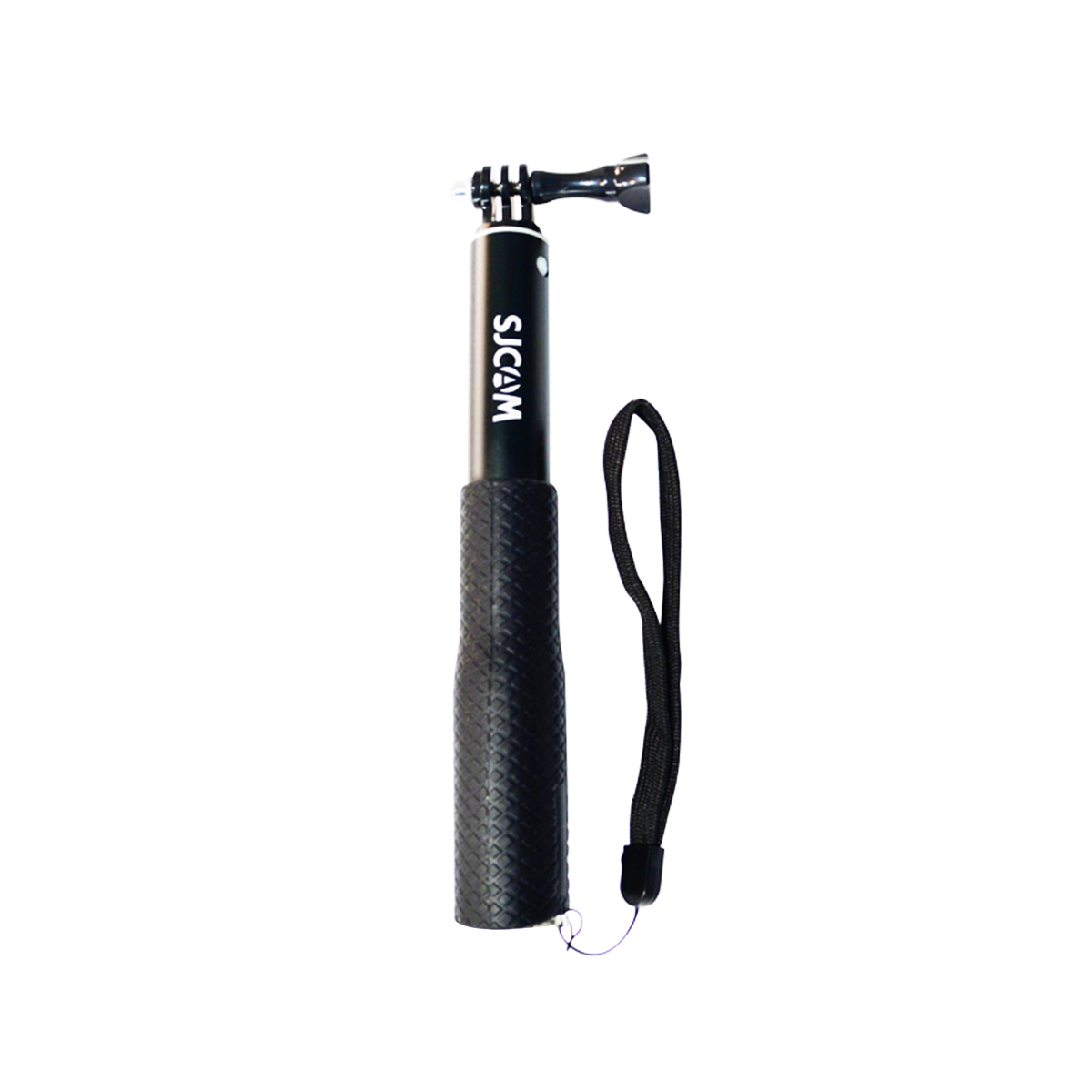


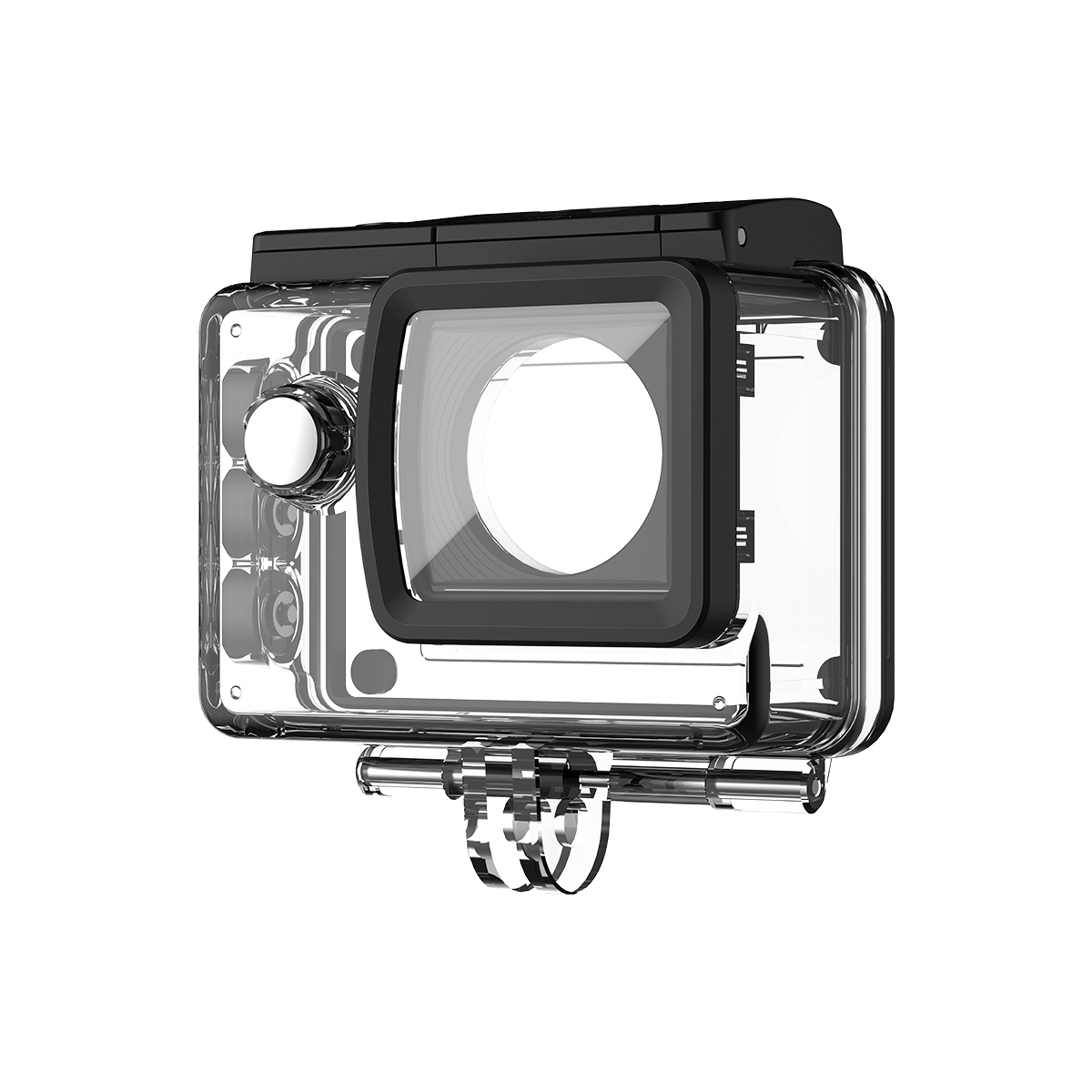
Front vs. Rear Bike Camera: Which Do You Need?
An action camera is perhaps the best investment if you need to record your bike rides. However, the choice between a front- versus rear-facing bike camera comes down to where and how you need to use it.
For many road commuters, a rear-facing camera can be a practical first choice because it records overtaking vehicles and traffic approaching from outside the rider’s normal field of view. A front camera may be more useful when junctions, road conditions, trails, or route footage are the main priority.
Ultimately, the better choice depends on the direction that the camera needs to be recording. If you need to record everything on either side, a dual setup can be considered as well.
Front, Rear, or Both? Quick Comparison
| Scenario | Recommended camera | Use cases |
| Daily urban commuting | Rear camera | Captures overtakes, close passes, and traffic approaching from behind. |
| Busy roads with fast traffic | Rear camera | Covers hazards outside your normal line of sight. |
| Mountain descents | Front camera | Document the road surface, corners, oncoming traffic, and your line. |
| Complex city junctions | Front camera or dual setup | Captures traffic lights, turning vehicles, and vehicles entering your path. |
| Group rides | Rear camera | Helps document riders, vehicles, and incidents behind as well as among the group. |
| Tourism | Dual setup, or rear first | Provides broader incident evidence and travel footage. |
| Recreational trail rides | Front camera | Records terrain, obstacles, and route footage. |
| Insurance or evidence | Dual setup | Records the rider and fellow commuters alike. |
There is no single setup that is right for every cyclist. Your route, riding environment, and reason for recording matter more than simply choosing “front” or “rear.”
Do I Need a Rear Bike Camera?
A rear-facing bike safety camera is especially useful for riders who frequently share roads with motor vehicles.
Because cyclists normally need to keep their attention on the road ahead, events happening behind them can be difficult to observe directly. A rear camera provides a record of that part of the ride.
Who should consider a rear bike camera?
Rear cameras are particularly useful for:
- Daily commuters riding in mixed traffic
- Road cyclists using narrow or high-speed roads
- Riders concerned about close passes
- Group riders who want to record activity behind the bike
- Cyclists who want an additional record of road incidents
What Can a Rear Camera Record?
Depending on mounting position and visibility, rear footage may capture:
- Vehicles approaching from behind
- Overtaking vehicles
- Close passes
- Rear-end incidents
- Riders following in a group
- Traffic activity outside the rider’s forward field of view
For commuters whose biggest concern is traffic approaching from behind, a rear camera may therefore be the logical first camera to install.
When Is a Front Bike Camera More Useful?
A front-facing camera records approximately what the rider encounters ahead.
This makes it especially useful when intersections, road conditions, trails, or route footage are the main priority.
Who Should Prioritize a Front Camera?
A front-facing cycling camera can be a better fit for:
- Riders using junction-heavy urban routes
- Gravel and mountain bike riders
- Cyclists recording routes or scenery
- Riders frequently descending steep roads
- Cycling vloggers and content creators
What Does a Front Camera Document?
A front bike camera can record:
- Traffic signals
- Intersections
- Vehicles turning across your path
- Lane positioning
- Potholes
- Road debris
- Changes in road surface
- Trail obstacles
- Route and scenery footage
For off-road riders, a front camera also provides a much more useful view of terrain and obstacles than a rear-facing camera.
Is a Front-and-Rear Bike Camera Setup Worth It?
For riders who want broader coverage, using one camera at the front and another at the rear has an obvious advantage: each camera records events that the other cannot see.
The front camera records the route and hazards ahead, while the rear camera records vehicles and riders approaching from behind.
Together, the two angles can provide a more complete timeline of an incident.
Depending on local laws and the circumstances of an event, recorded footage may also be useful when reporting an incident or supplying supporting information to an insurer. However, a camera cannot guarantee that every relevant detail—such as a license plate—will always be readable.
When Does a Dual Setup Make Sense?
Consider front-and-rear recording if you:
- Commute frequently in traffic
- Regularly ride on fast or narrow roads
- Ride after dark
- Want broader incident documentation
- Want both cycling content and road footage
The trade-offs are additional cost, charging, storage requirements, and extra equipment mounted on the bike.
Front vs. Rear vs. Dual Bike Camera
| Jellemző | Front bike camera | Rear bike camera | Dual setup |
| Primary coverage | Road and traffic ahead | Traffic behind | Both directions |
| Legjobb | Trails, intersections, descents, and route footage. | Commuting and road riding | Riders wanting broader coverage |
| Typical mounting | Handlebar, stem, helmet, or chest | Seatpost, saddle rail, or rear rack | Front plus rear mounting |
| Key recorded evidence | Signals, turning vehicles, road surface, forward hazards. | Unsafe passing, rear approach, and rear-end incidents. | Complete event timeline. |
| Main challenge | Glare, road vibration, changing light. | Obstructed view and plate readability | Cost, charging, and file management |
| Recommended first purchase | For trails, descents, and junction-heavy routes. | For most commuters and road riders. | For riders who need full coverage. |
| First camera to consider | When forward hazards matter most | When rear traffic is the main concern | When coverage matters more than simplicity |
Can the SJCAM SJ6 Ultra Work as a Front or Rear Bike Camera?
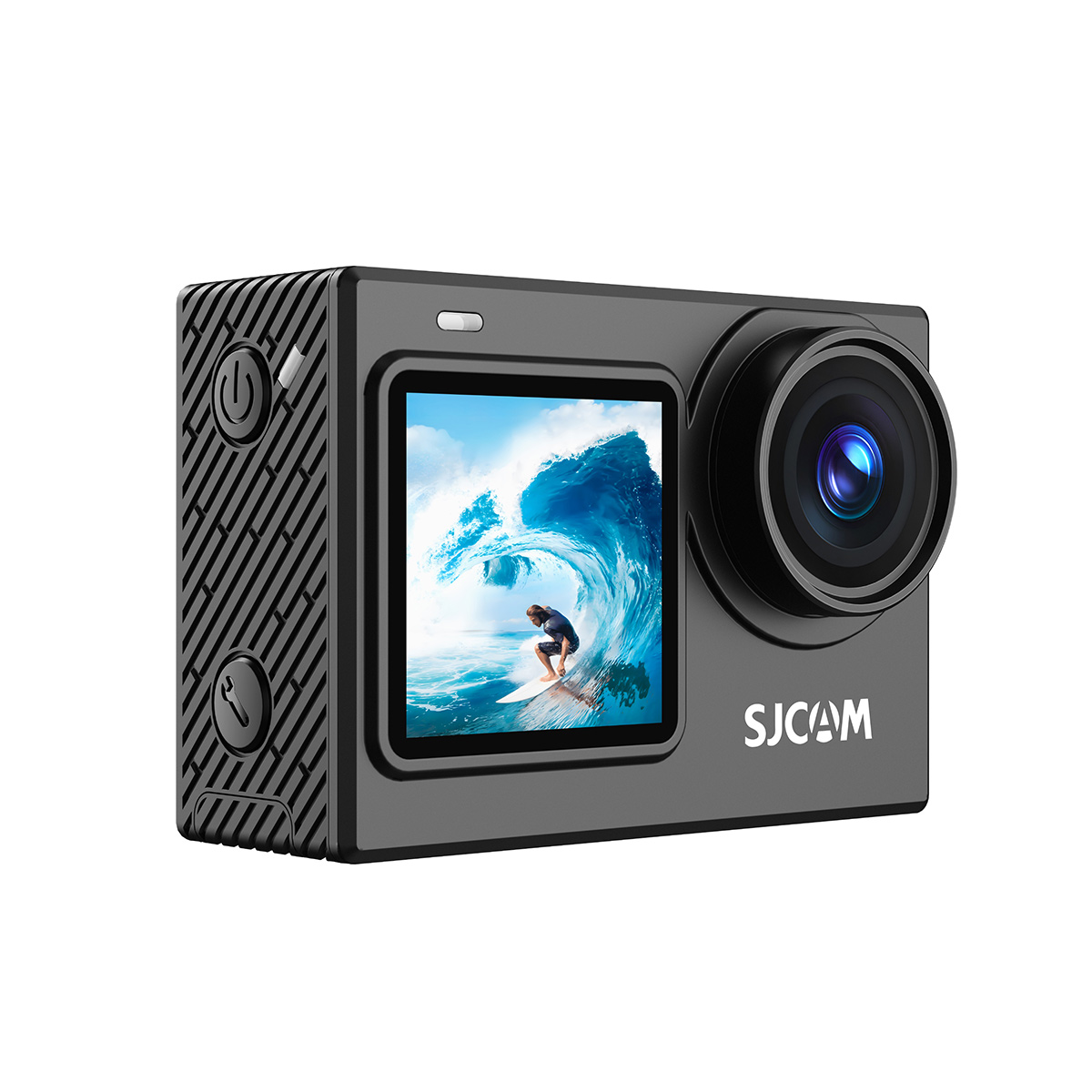
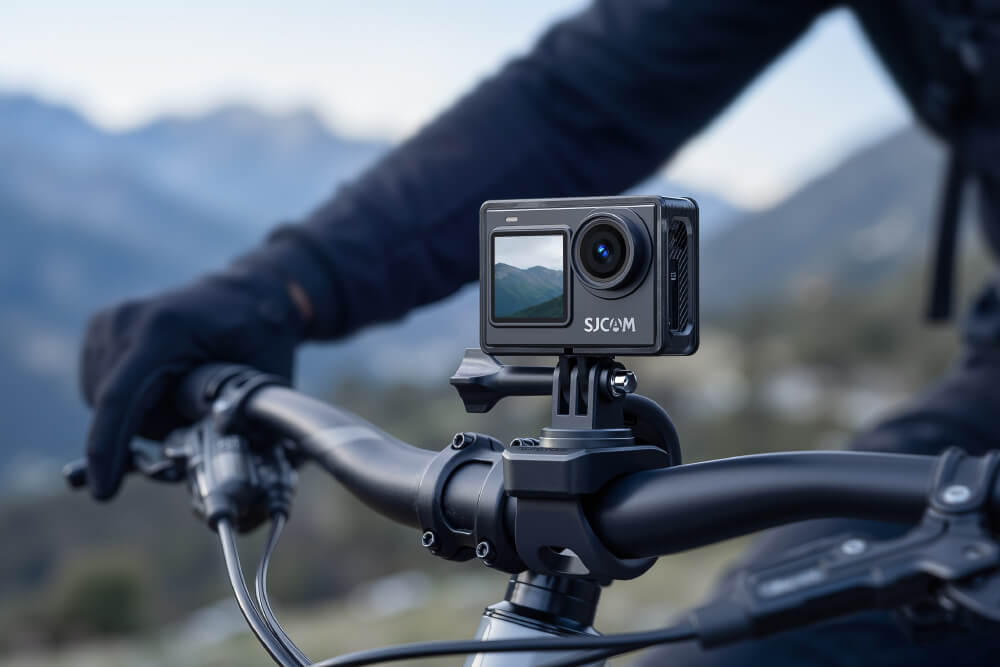
A SJCAM SJ6 Ultra can be used in either orientation when paired with an appropriate and secure bicycle mount.
It records up to 4K at 30 fps and uses a 166° wide-angle lens, helping capture a broad section of the riding environment. Six-axis gyro stabilization and horizon correction are designed to reduce the visual impact of movement and uneven terrain.
The camera also includes a 2.0-inch rear touchscreen and 1.3-inch front display, making framing easier when changing mounting positions.
Using the SJ6 Ultra as a Front Bike Camera
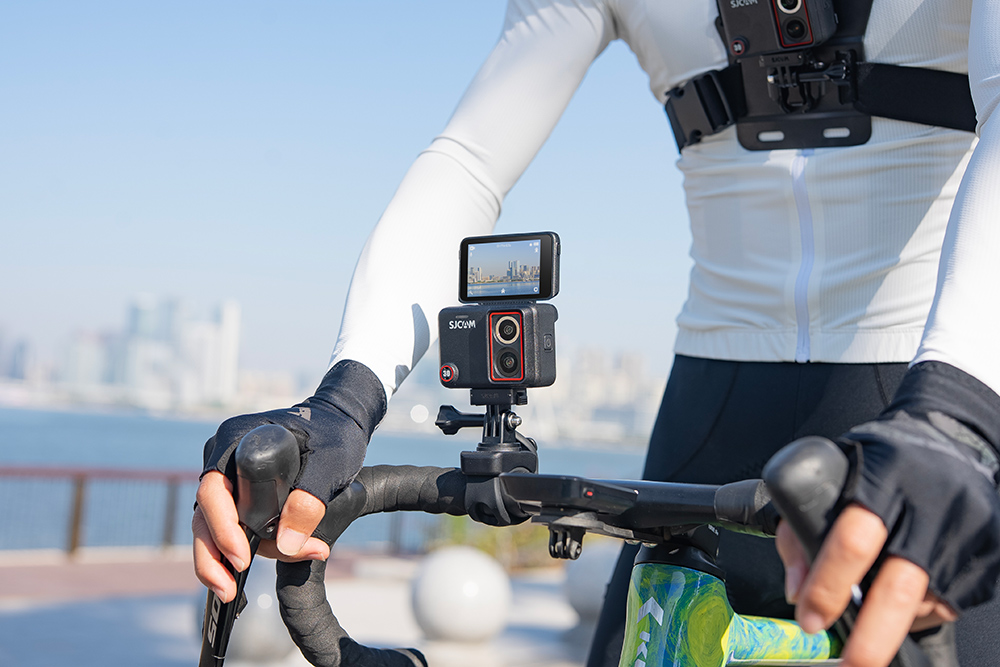
Mounted securely to a handlebar, stem, or suitable helmet mount, the camera can record:
- Roads and trails ahead
- Intersections
- Road surfaces
- Traffic movements
- Descents
- Cycling POV footage
Its wide field of view can be useful when the goal is to capture both the rider’s line and surrounding road environment.
Using the SJ6 Ultra as a Rear Bike Camera
With an appropriate rear-facing mount, the SJ6 Ultra can also be positioned to record vehicles and riders approaching from behind.
Before riding, check the live framing to make sure that the saddle, bag, wheel, or rider’s body does not obstruct the field of view.
Can One SJ6 Ultra Record Front and Rear Simultaneously?
No.
The front and rear displays are used for framing the same camera lens; they are not separate front- and rear-facing recording cameras.
To continuously record both directions at the same time, you would need two cameras or a dedicated dual-camera system.
What to Look for in a Bike Camera?
Resolution is useful, but it should not be the only specification you consider.
For real-world cycling, several features can have a bigger effect on whether the footage is actually usable.
1. Stable mounting
Vibration can reduce image clarity considerably, particularly on rough roads.
Choose a rigid mount and check it regularly for movement.
2. Image stabilization
Stabilization can make footage easier to review and help reduce the visual effects of road vibration.
3. Battery runtime
Compare expected recording time with the length of your normal rides.
Remember that real-world runtime can vary with resolution, frame rate, temperature, display use, and camera settings.
4. Loop recording
For riders mainly interested in safety footage, loop recording can reduce the need to manually delete older clips when storage becomes full.
5. Low-light performance
Dawn, dusk, and nighttime riding can make vehicles and license plates harder to capture clearly.
If you regularly commute in low light, review sample footage rather than relying only on resolution specifications.
6. Storage capacity
Higher resolutions create larger files.
Check the supported microSD capacity and estimate whether it is sufficient for the length of your normal rides.
7. Weather protection
Cycling cameras can be exposed to rain, road spray, dust, and mud.
Check the manufacturer’s waterproofing specifications and whether additional housing is required.
8. Easy file transfer
USB and wireless transfer options can make it easier to save important footage without repeatedly removing the memory card.
How to Mount a Front Bike Camera?
Common front mounting locations include the:
- Handlebar
- Stem
- Helmet
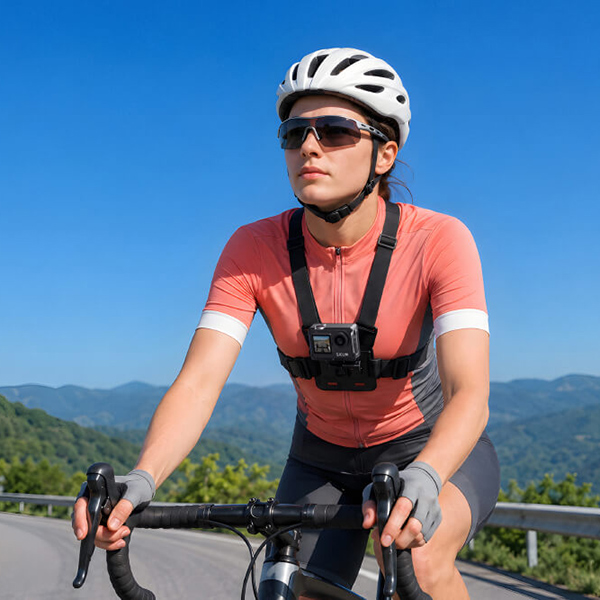
- Chest
Whichever position you choose, the camera should have a clear forward view without cables, hands, or accessories obstructing the lens.
Before a full ride, record a short test clip and check whether the horizon, road surface, and surrounding traffic are visible.
Also check for excessive vibration.
How to Mount a Rear Bike Camera?
A rear camera is commonly mounted to the:
- Seatpost
- Saddle rail
- Rear rack
The most important requirement is an unobstructed rear view.
Make sure that your legs, saddle bag, clothing, or other accessories do not repeatedly enter the frame.
Instead of relying on one fixed camera angle for every bicycle, record a short test ride and review the footage. Adjust the angle until the road behind and approaching traffic occupy a useful part of the frame.
Front or Rear Bike Camera: Which Should You Choose?
Your riding environment should determine which direction you prioritize.
- Choose a rear bike camera first if your main concern is approaching traffic, overtakes, and close passes during road commuting.
- Choose a front bike camera first if you mainly want to document intersections, road conditions, trails, descents, or cycling content.
- Choose a front and rear bike camera setup when you want broader coverage in both directions and do not mind the extra cost of charging and file management.
The important question is therefore not simply whether a front or rear camera is better.
It is:
What part of your ride do you most need to record?
Higher-resolution cycling footage can fill a memory card quickly. If you’re unsure about capacity or speed class, see our guide to choosing the right SD or microSD card for your camera.
GYIK
For riders whose biggest concern is vehicles approaching and overtaking from behind, a rear-facing camera can be more useful. Riders using complex junctions may get more value from a front camera, while frequent road commuters may prefer coverage in both directions.
Not every cyclist needs one. A rear camera is most useful when you regularly ride in mixed traffic and want a record of vehicles approaching or passing from behind.
One SJ6 Ultra cannot continuously record two directions simultaneously. You would need two cameras or a dedicated dual-camera system to record the road ahead and behind at the same time.
Not necessarily. Higher resolution can provide additional image detail, but stabilization, lighting, mounting position, motion, and distance also affect whether important details are visible.
Common mounting locations include the seatpost, saddle rail, and rear rack. The correct position is one that keeps the camera secure and provides an unobstructed view behind the bicycle.
Footage may help document what happened and can potentially support a report or insurance claim, depending on the circumstances and local rules. A recording should be treated as one piece of information rather than a guarantee that liability can be established.
Legújabb blogbejegyzések